

Table of Contents
- Quality of Handcrafted vs Mass-Produced Decor
- Why Locally Made Decor Supports the Local Economy
- Sustainable Home Decor Brands and Environmental Impact
- How to Style Artisanal Home Accessories in Any Room
- Spotting Greenwashing in Decor and Finding Authentic Pieces
- Budgeting for Local Decor: Smart Ways to Invest in Handcrafted Pieces
- Caring for Artisan Goods: Maintenance Tips for Longevity
- Conclusion
- Frequently Asked Questions
Last Updated: September 16, 2026
Quality of Handcrafted vs Mass-Produced Decor
Why choose locally made home decor? Because the difference shows up in the details you can feel, and that's the heart of why choose locally made home decor. Handcrafted pieces are made in small batches by individual artisans, while mass-produced decor comes off assembly lines by the thousands. That distinction affects everything from material quality to how long a piece actually lasts in your home.
At Frijja, we've handled enough artisan pieces to know what separates a keeper from a regret. The quality gap starts with materials. Small-batch makers select wood, wool, and metal by hand, checking grain and weight before a single cut. Mass producers optimize for volume, which often means thinner materials and finishes that look fine in photos but wear quickly on a shelf.
Here's what most guides miss: the real test isn't the first impression, it's year three. A handcrafted wooden ornament or a felt gnome keeps its shape because someone sewed and shaped it to last, not to survive a shipping container.
Why Locally Made Decor Supports the Local Economy
Money spent with local makers stays closer to home. When you buy from a neighborhood artisan or a small shop, a larger share of that purchase circulates back into nearby businesses, from the framer to the craft supplier to the workshop space.
This is the practical case for conscious consumerism, and it's less abstract than it sounds. Local makers hire locally, source locally where they can, and often teach. Many shops run beginner-friendly workshops, which means your purchase helps keep traditional skills alive in your own community rather than outsourcing them entirely.
- Local purchases support nearby jobs and suppliers
- Small-batch production keeps traditional skills in practice
- Workshops and classes pass those skills to the next generation
- Shops curate based on relationships, not warehouse clearance
The ripple effect matters more than any single sale.
Sustainable Home Decor Brands and Environmental Impact
Sustainable home decor brands share one trait: they think about the environmental footprint of every material. That usually means renewable materials like wood and wool, recycled materials where possible, and shorter supply chains that cut shipping emissions.
EPA guidance on reducing waste and supporting sustainable purchasing outlines how buying durable, repairable goods reduces landfill waste over time. For decor, that principle is simple: a piece that lasts ten years beats three pieces that last three.
A common mistake is assuming "sustainable" means "boring" or "expensive." It doesn't. A wooden ornament made from responsibly sourced timber is often cheaper than a plastic import, and it ages better. Carbon footprint reduction in decor is mostly about buying fewer, better things.
How to Style Artisanal Home Accessories in Any Room
Styling artisan pieces comes down to grouping, texture, and restraint. You don't need a full redesign, just a few deliberate placements that let handcrafted items carry the visual weight.
Start with one focal point per surface. A handmade gnome or a wooden elk ornament on a shelf draws the eye when it isn't competing with clutter. Mix textures on purpose: soft felt against smooth wood, matte against a little shine. Keep the palette tight, two or three colors, and let the craftsmanship do the talking.

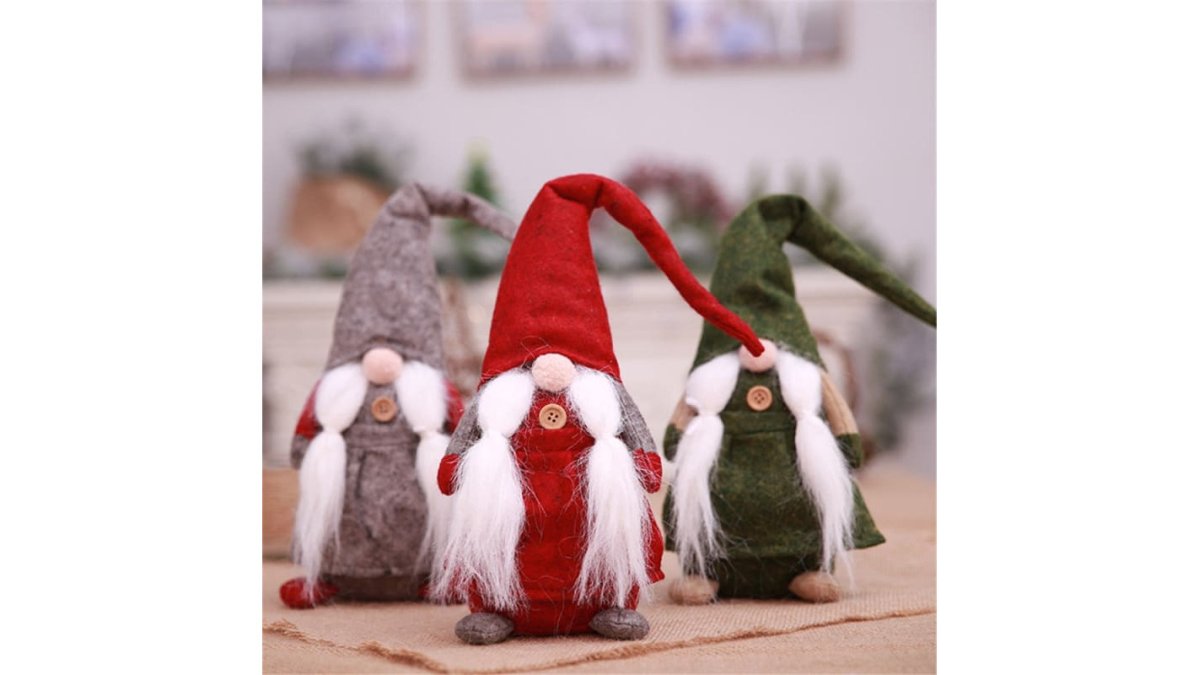
For a curated living space, rotate pieces seasonally instead of buying new ones. The same wooden sleigh ornaments can anchor a holiday mantel one month and a winter console the next. Intentional living isn't about having less, it's about choosing pieces that earn their spot.
Spotting Greenwashing in Decor and Finding Authentic Pieces
Greenwashing in decor is any marketing that borrows the language of sustainability or craftsmanship without the supply chain to back it up. The tell is almost always vagueness: "eco-friendly," "natural," "artisan-inspired," and "green" carry no legal definition for home decor, so a seller can print them on anything. Specificity is the filter. A real claim names a material, a source, and a process.
Handmade Christmas Gnome Holiday →
Start with the material claim. "Responsibly sourced wood" is marketing. "Reclaimed white oak from a barn in the region" is a fact you can verify. The same rule applies to textiles: "natural fibers" tells you nothing, while "undyed wool from a specific mill" tells you the maker knows their supply chain. When a listing can't name the material beyond a category, treat the sustainability language as decoration.
Then look at the price and volume pattern. Small-batch production has a cost floor. If a piece is priced like a mass-market import and the same design appears on dozens of unrelated sites at nearly identical prices, it was almost certainly produced in volume and relabeled. Genuine small-batch work varies in price because materials, labor hours, and batch sizes vary. Uniformity across unrelated sellers is the strongest single signal of a mass-produced item wearing a handmade costume.
Verify the maker, not the label. A legitimate artisan or small shop can usually answer three questions without hesitation: who made the piece, where the workshop is, and what the piece is made of. Many maintain a public presence, a studio page, a process video, a craft fair booth, a maker profile, that predates the product listing. A brand with no traceable human behind it, only polished product photography, is a flag. So is a shop that sells every category of decor at once; real small makers tend to specialize.
Use this checklist before you buy:
- Does the listing name the specific material and its source, not just a category?
- Is there a named maker, workshop, or studio you can look up independently?
- Does the price reflect small-batch labor, or does it match mass-market imports?
- Does the same design appear on many unrelated sites at near-identical prices?
- Does the shop explain how the piece was made, not just that it was "handcrafted"?
- Are sustainability claims specific and checkable, or just adjectives?
- Does the seller specialize, or do they sell every decor category at once?
FTC guidance on environmental marketing claims explains the Green Guides, which set the standard for when terms like "recycled" or "sustainable" can be used without deceiving buyers.
Authentic pieces usually come with a story you can trace: who made it, where, and from what. If a seller can't answer those questions, the "artisan" label is marketing, not evidence.
Budgeting for Local Decor: Smart Ways to Invest in Handcrafted Pieces
Budgeting for local decor works best when you treat it like any other considered purchase: set a per-piece ceiling, prioritize pieces you'll actually display, and buy fewer items at higher quality. The gap most guides leave open is the how, specifically, how to build a collection over years without overspending in any single season.
| Budget Tier | What to Buy | Typical Piece Type |
|---|---|---|
| Entry | One accent piece per season | Small wooden ornaments, felt accents |
| Mid | A focal item for one room | Handcrafted decor accents, small textiles |
| Investment | A signature piece you'll keep for years | Limited antiques, fine handcrafted pieces |
Caring for Artisan Goods: Maintenance Tips for Longevity
Artisan goods last decades when you maintain them, and that maintenance is simpler than most people expect. Wood needs dusting and occasional conditioning, textiles need gentle spot cleaning, and metal needs a soft cloth to prevent tarnish.
Conclusion
The real challenge with locally made decor isn't finding beautiful pieces, it's knowing which ones will still look good in five years. That's where a curated shop beats a marketplace every time. Frijja offers handcrafted and uniquely designed items, made by local artisans, alongside fine jewelry and limited antiques, with quality assurance and satisfaction guaranteed on every piece. Whether you're after a seasonal accent or a signature antique, you'll find pieces built to last.
Frequently Asked Questions
What are the primary benefits of buying locally made home decor?
Buying locally made decor supports small businesses and keeps money in your community. It also reduces shipping emissions and often means higher quality because artisans use traditional skills and durable materials. You get unique pieces with a story, not mass-produced items that look like everyone else's. Plus, local makers are often open to custom requests, so you can get exactly what fits your space.
How can I identify authentic locally made home goods?
Look for transparency about materials and production. Ask where the piece was made and who made it. Authentic local goods often have slight variations in texture or finish, which is a sign of handcrafting. If a seller can't tell you the maker's name or the source of materials, it's likely not truly local. Visiting shops in person, like those in Rehoboth Beach, lets you see and feel the quality.
Is locally made home decor more durable than mass-produced alternatives?
Often, yes. Artisans typically use higher-quality materials and time-tested techniques, so pieces hold up better over years. Mass-produced decor may use cheaper materials and assembly-line methods that lead to faster wear. For example, a handcrafted wooden ornament is more likely to last than a flimsy plastic one. However, durability also depends on care, so follow maintenance instructions to keep artisan goods looking their best.
How does choosing handmade decor impact the environment?
Handmade decor usually has a smaller environmental footprint because it's made in small batches, often with renewable or recycled materials, and doesn't require long-distance shipping. Mass production creates more waste and carbon emissions. By choosing handmade, you support sustainable practices and reduce your carbon footprint while adding unique character to your home.
0 commenti