
How to Spot Quality Handmade Jewelry: A Buyer's Guide
Table of Contents
- How to Spot Quality Handmade Jewelry: Essential Inspection Techniques
- Signs of High Quality Jewelry Craftsmanship
- Evaluating Gemstone Authenticity and Clarity
- Are Recycled Metals Durable for Jewelry
- Handcrafted vs. Mass-Produced: Spotting the Difference
- How to Care for Artisanal Jewelry
- Post-Purchase Testing Methods
- Frequently Asked Questions
Last Updated: September 22, 2026
How to Spot Quality Handmade Jewelry: Essential Inspection Techniques
Learning to spot quality handmade jewelry requires more than just admiring how a piece looks. The difference between a bracelet that lasts decades and one that falls apart in months often comes down to details most buyers never examine. At Frijja, we help customers understand what separates genuine artisanal craftsmanship from mass-produced imitations disguised as handmade.
When you're evaluating handcrafted jewelry, you're looking at the intersection of material quality, construction technique, and design integrity. Each element tells a story about how much care went into creating the piece. This guide walks you through the specific inspection methods that reveal whether a piece is truly handcrafted or just marketed that way.
Start with the Hallmark and Metal Stamp
The first thing to examine is the metal stamp. On sterling silver jewelry, you'll find markings like "925" or "950", these numbers indicate the purity of the silver. Sterling silver 925 means the piece contains 92.5% pure silver; 950 sterling silver contains 95% pure silver and represents higher quality material. If you see no hallmark at all, that's an immediate red flag.

Run your finger over the hallmark. Genuine stamps are crisp and deeply impressed into the metal. Cheap imitations often have shallow, blurry markings that feel rough or uneven. Legitimate artisans take pride in their hallmarks because they're signing their work.
Beyond the percentage mark, look for maker's marks or artist initials. Many handcraft artisans include their own signature stamp on pieces they create. This personal mark demonstrates accountability and pride in craftsmanship.
Examine the Weight and Balance
Hold the jewelry in your palm. Quality handmade pieces have substantial weight that feels purposeful. A bracelet made from 950 sterling silver feels noticeably heavier than one made from base metal with thin plating. This weight-to-size ratio is one of the easiest ways to spot the difference between genuine precious metals and cheap alternatives.
Genuine handcrafted pieces are designed with balance in mind. If a bracelet feels lopsided or the weight shifts uncomfortably when you wear it, that suggests rushed production or poor design. Artisans who hand-make jewelry consider how the piece will feel on the body, not just how it looks in photos.
Test the balance by placing the bracelet on a flat surface. Does it sit evenly, or does one side tilt? A well-crafted piece maintains equilibrium. This detail matters because it indicates the maker thought through the entire user experience, not just the visual presentation.
Signs of High Quality Jewelry Craftsmanship
High quality jewelry craftsmanship reveals itself through dozens of small details that compound into durability and beauty. The hallmark of genuine artisanal work is consistency, every solder joint, every prong, every polished surface shows the same level of attention.
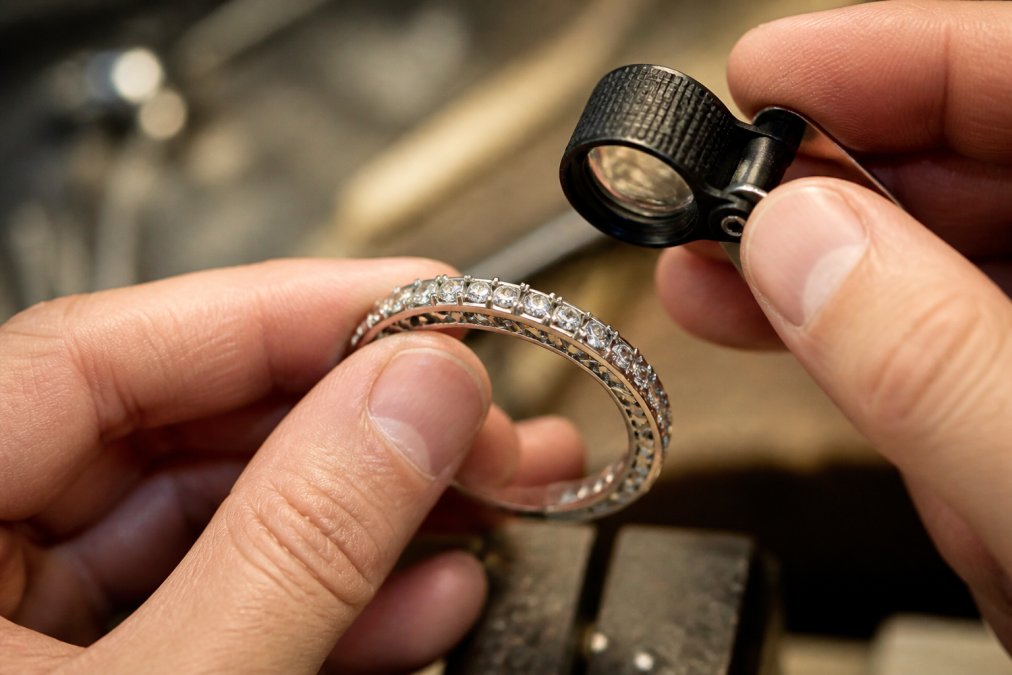
Prong Settings and Stone Alignment
Examine how gemstones are set into the metal. In quality handmade jewelry, prongs are evenly spaced and sit at precise angles. Each prong should contact the stone at the same height, creating a secure, balanced grip. If prongs are uneven or one sits higher than another, the stone will move and eventually fall out.
Look at the gap between the stone and the metal. There should be minimal space. A large gap suggests the stone was set hastily or the prong was bent incorrectly. Quality artisans file and adjust prongs until they fit the stone perfectly.
Run your fingernail across the prongs. They should feel smooth and finished. Rough or sharp prongs indicate the piece wasn't properly finished after setting. This isn't just an aesthetic issue, rough prongs can snag fabric and skin, and they suggest the artisan didn't invest time in final polish.
Solder Joints and Seams
Solder is the metal used to join two pieces of jewelry together. In quality handmade work, solder joints are nearly invisible. They blend seamlessly with the surrounding metal because the artisan filed and polished them after soldering.
Examine joints under bright light. You're looking for smooth transitions where two pieces meet. Poor quality work shows visible solder blobs, rough edges, or discolored areas around joints. These signs indicate the maker rushed the finishing process.
Feel along seams with your fingertip. Quality joints feel smooth and continuous. Rough seams catch your skin or snag fabric. This is a practical quality indicator, if the piece feels rough, it will wear uncomfortably and deteriorate faster.
Polishing Depth and Surface Finish
Run your hand across the entire surface of the bracelet. High quality handcrafted jewelry has a consistent finish. The polish should be deep and even, reflecting light uniformly across the piece. Dull spots or inconsistent shine suggest the artisan used a machine polisher without proper skill or attention.
Examine the finish under different lighting conditions. Move the piece from natural light to indoor light. A well-polished surface maintains its shine and appearance across lighting changes. Cheap polishing jobs look good under one light but reveal flaws under another.
Moon Radiance Bracelet 950 Sterling →
Look at textured areas if the design includes them. Quality artisans intentionally vary texture for visual interest. Smooth areas should be mirror-polished. Textured areas should have consistent, deliberate patterns. Random or uneven texture suggests lack of control during creation.
Evaluating Gemstone Authenticity and Clarity
Gemstone quality directly impacts the value and longevity of handmade jewelry. Real gemstones have natural variations, inclusions, color shifts, and subtle imperfections that prove authenticity. Synthetic stones are too perfect, lacking the character of natural gems.
Examine the stone under magnification. A jewelry loupe (10x magnification) reveals whether you're looking at a genuine gemstone or glass. Natural gemstones show internal structure, tiny crystals, color variations, or inclusions. Glass appears uniform and featureless under magnification.
Check clarity by looking through the stone toward light. Natural gemstones may contain visible inclusions, but these should be consistent with the stone type. For example, sodalite stones naturally contain white calcite veining. If a sodalite shows no veining at all, it's likely synthetic or treated.
Ask the artisan or seller about the stone's origin.
Are Recycled Metals Durable for Jewelry
Recycled metals are absolutely durable for jewelry, in fact, recycled sterling silver 950 performs identically to newly mined silver. The metal composition is what matters, not its source. A bracelet made from recycled 950 sterling silver will last as long as one made from virgin material.

Handcrafted vs. Mass-Produced: Spotting the Difference
The gap between handcrafted and mass-produced jewelry is visible in every detail once you know what to look for. Mass-produced pieces are designed for speed and cost reduction. Handcrafted pieces are designed for durability and beauty.
The Drop-Shipping vs. Handmade Trap
This is where many buyers get fooled. Some sellers claim pieces are "handmade" when they're actually drop-shipped from overseas factories. The pieces arrive at the seller's location, get photographed, and are sold as artisanal work. The seller never actually made anything.
Ethical and Sustainable Certification Verification
Look for third-party certifications from organizations that verify ethical sourcing and sustainable practices. Certifications add credibility because they involve independent verification. A seller claiming "ethically sourced" without certification is making an unverified claim.
How to Care for Artisanal Jewelry
Quality handmade jewelry requires proper care to maintain its appearance and durability. Clean sterling silver regularly using a soft cloth and mild soap. Avoid harsh chemicals and abrasive cleaners that damage the finish.
Post-Purchase Testing Methods
After purchasing handmade jewelry, verify quality through simple tests. The magnet test works for precious metals: real sterling silver isn't magnetic. Hold a magnet near the piece. If it sticks, you're looking at base metal with plating, not genuine silver.
| Inspection Point | What to Look For | Quality Indicator |
|---|---|---|
| Hallmark | "925" or "950" stamp, crisp and deep | Genuine precious metal, artisan accountability |
| Weight | Substantial, purposeful feel | Real sterling silver vs. plated base metal |
| Prong Settings | Even spacing, smooth contact, minimal gaps | Stone security and longevity |
| Solder Joints | Invisible, smooth transitions, no blobs | Skilled finishing and attention to detail |
| Surface Finish | Consistent polish, deep shine, even texture | Proper hand-finishing techniques |
| Gemstones | Natural variations, internal structure visible under loupe | Authentic vs. synthetic stones |
| Overall Design | Individual variation, intentional details | Handmade vs. mass-produced |
EXTERNAL LINK CITATIONS:
Frequently Asked Questions
How can you tell the difference between handmade and mass-produced jewelry?
Handcrafted jewelry shows visible variations in finish, slightly irregular prong placement, and individual artisan touches that mass-produced pieces lack. Mass-produced items have uniform, identical details and perfect symmetry, a sign they came from molds or automated machinery. Examine solder joints closely: artisanal work shows careful, hand-applied seams, while factory pieces have uniform, machine-applied joints. Check the clasp security and weight distribution; handmade pieces often feel more substantial and balanced because artisans select materials intentionally rather than using minimum-cost base metals.
Are recycled metals durable for jewelry?
Yes, recycled metals are fully durable for jewelry when properly processed and alloyed. Recycled sterling silver 925 and recycled gold have identical properties to newly mined metals because the recycling process refines them to the same purity standards. The durability depends on the alloy composition and craftsmanship, not whether the metal is recycled or new. Reputable artisans use recycled precious metals because they offer the same strength and longevity while supporting ethical sourcing. What matters is verifying the metal stamp, 950 or 925 sterling silver, 14K or 18K gold, regardless of origin.
What should I look for when inspecting jewelry craftsmanship?
Start with the hallmark and metal stamp to confirm authenticity. Then examine prong settings, they should be evenly spaced and secure, with no gaps between the prong and stone. Check solder joints for smoothness and proper flow; rough or lumpy seams indicate rushed work. Look at the overall polishing depth: high-quality pieces have consistent, mirror-like finishes without scratches or dull spots. Inspect the clasp mechanism for smooth operation and secure closure. Finally, evaluate the weight-to-size ratio; genuine precious metal pieces feel appropriately heavy for their dimensions, while lightweight pieces often contain base metal beneath thin plating.
How do I verify that artisanal jewelry is ethically sourced?
Ask the artisan or retailer directly about their sourcing practices and request documentation. Legitimate handcrafted jewelry makers can explain where their metals and gemstones come from. Reputable independent artisans often highlight their sourcing on their websites or product descriptions. Frijja's handcrafted pieces are sourced with attention to quality and authenticity, allowing you to shop with confidence.