

Table of Contents
- What's Trending in Antique Home Decor for 2026
- How to Authenticate Vintage Home Decor and Spot Reproductions
- Investment-Grade Antiques: Which Pieces Hold and Gain Value
- Luxury Home Accessories: Building a Curated Collection
- Antique Styling Tips for Modern Homes
- Sourcing Strategy: Where and How to Find Quality Antique Home Decor
- Maintenance and Restoration Basics for Antique Pieces
- Frequently Asked Questions
Last Updated: October 4, 2026
What's Trending in Antique Home Decor for 2026
The antique home decor market is shifting toward pieces that blend textures with minimalist integration. Today's collectors curate interiors where vintage serves as counterpoint to clean, contemporary lines, choosing investment-grade pieces that anchor a room's aesthetic rather than filling every surface.
Momentum has shifted toward art deco and early 20th-century European pieces with documented provenance. Collectors increasingly recognize that authentic vintage pieces hold resale value far better than reproductions.
Porcelain, ceramic accents, and vintage chandeliers with original patina command premium prices. Woven wares and rugs have become focal points. Buyers increasingly view character marks and age-appropriate wear as proof of authenticity rather than flaws.
Sustainable design principles reshape how collectors approach antique home decor. Vintage pieces eliminate manufacturing waste while delivering uniqueness that mass production cannot match.
How to Authenticate Vintage Home Decor and Spot Reproductions
Authentication requires understanding markers of genuine pieces across materials and periods. The most common mistake: assuming age equals authenticity. Many reproductions are themselves decades old.
Examine materials and construction. Genuine antique furniture shows wood grain variation, hand-tool marks, and period joinery. Hand-forged nails indicate earlier pieces; machine-cut nails didn't exist before the 1800s. Reproductions use uniform, modern fasteners.
For ceramics, examine the base for maker's marks, kiln signatures, or pattern numbers. Research marks against museum collections and auction catalogs, many reproduction manufacturers deliberately copy historical marks.
Genuine patina shows uneven color variation, subtle wear, and dust in crevices. Artificial patina looks uniform and sits on the surface. Run your fingers along edges, authentic wear feels natural, not deliberately distressed.
Request documentation and provenance whenever possible. Auction house catalogs, previous ownership records, and expert appraisals add credibility. Be skeptical of sellers who cannot provide any history. The most valuable pieces often come with clear documentation of origin and previous ownership.
Investment-Grade Antiques: Which Pieces Hold and Gain Value
Pieces that hold value share specific characteristics: established maker reputation, scarcity, appropriate condition, and documented collector demand.
Furniture from recognized makers, Stickley, Heywood-Wakefield, mid-century Scandinavian designers, consistently appreciates. Signed Arts and Crafts pieces can resell for 300 percent more than unsigned contemporary pieces from the same period.
Collectible categories with sustained demand: art deco lighting, vintage Persian and Turkish rugs, and early 20th-century decorative arts. Ceramics by known studios with limited production runs appreciate steadily.
Condition matters more for investment pieces. A chandelier with original wiring and all components intact commands higher prices than one requiring restoration. Original finishes appreciate faster than refinished pieces.
Pieces connected to documented design movements, art deco, mid-century modern, arts and crafts, weather market fluctuations better than trendy items. Prioritize established movements over contemporary trends.
Luxury Home Accessories: Building a Curated Collection
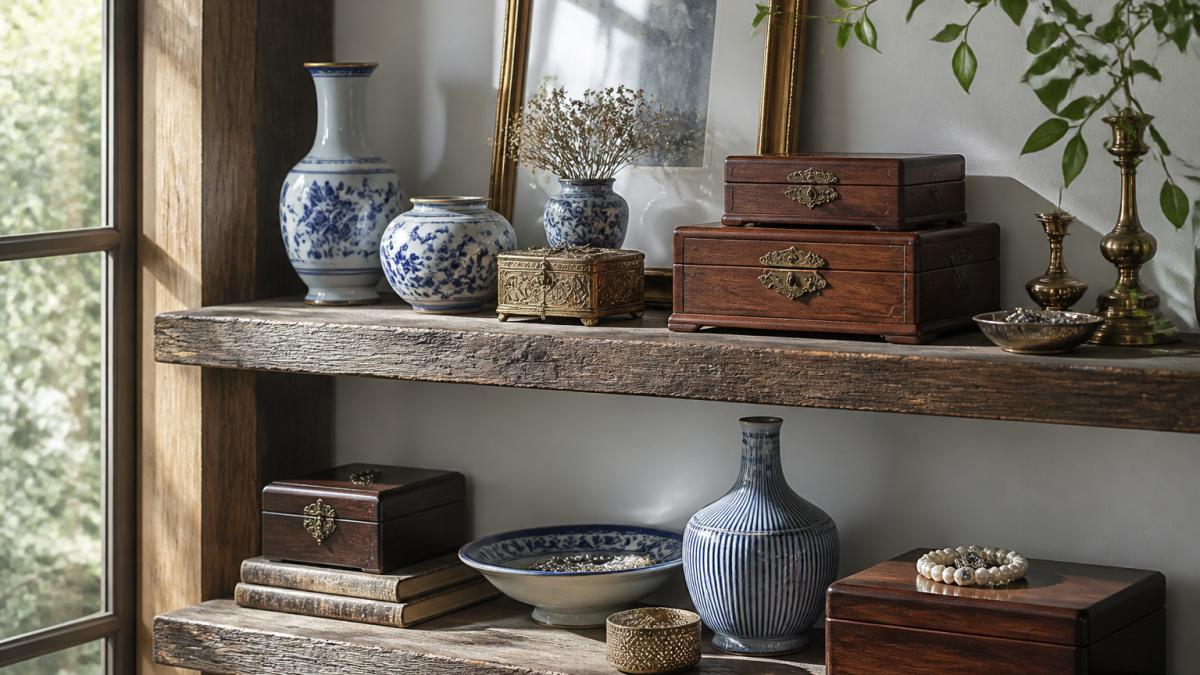
Building a meaningful collection requires restraint. Curated interiors feature carefully selected pieces that speak to each other visually, prioritizing aesthetic balance and negative space.
Identify a through-line, a design movement, color palette, material family, or period, that anchors your choices. This creates coherence. When each piece connects to a broader vision, the collection reads as curated rather than accumulated.
Quality surpasses quantity. One exceptional vintage rug establishes a room's character more effectively than five mediocre decorative accents. The same applies to furniture, lighting, and accessories. A single handcrafted wooden jewelry box with floral painted details and velvet lining, like the vintage handmade wood jewelry boxes available through specialty retailers, becomes a focal point that justifies the investment through both aesthetic and functional value.

Mix periods deliberately. Pairing art deco metalwork with minimalist shelving creates intentional visual tension. Maintain 60/40 proportion between eras to read as design choice rather than accident.
Consider scale and placement. Small pieces deserve space to breathe. Crowded shelving diminishes even exceptional items. Negative space transforms a collection from hoarding into curation.
Antique Styling Tips for Modern Homes
Successful modern interiors using antique home decor treat vintage pieces as anchors rather than theme elements.
Use vintage pieces to ground neutral palettes. A room with white walls and minimal contemporary furniture gains warmth when anchored by a vintage rug with jewel tones or wooden piece with visible patina.
Layer textures deliberately. Smooth modern surfaces benefit from worn wood, woven materials, and aged metal. A glass coffee table next to a vintage wooden side table creates visual interest through material contrast.
Limit antique home decor to one statement piece per room, supported by contemporary elements. A mid-century credenza anchors a room with contemporary art and lighting supporting rather than competing.
Avoid mixing too many design eras in visible sight lines. A Victorian chair works when it's the only period piece visible. Distribute vintage pieces across rooms to maintain coherence.
Consider function alongside aesthetics. A vintage wooden box serves as both decorative accent and storage, like the Colonial Williamsburg mahogany keepsake boxes with engraved tile tops, creating practical value that justifies its presence. Pieces that work harder functionally integrate more naturally into modern living.

Sourcing Strategy: Where and How to Find Quality Antique Home Decor
Match your expertise and budget to the right sourcing venue.
Estate Sales: High Authenticity, Time-Intensive
Estate sales feature documented provenance from single households. Arrive 30-60 minutes early; best pieces sell within the first hour.
Use printed catalogs as baseline, not ceiling. Set maximum bids before the sale to avoid auction fever.
Estate sales rarely offer returns.
Auction Houses: Expert Authentication, Premium Pricing
Auction houses provide detailed condition reports, professional photography, and expert attribution.
Authentication risk is lowest here.
Online platforms require photograph-dependent evaluation. Request additional images of wear, patina, and damage.
Antique Dealers and Specialty Shops: Curated Selection, Higher Cost, Relationship-Based
Reputable dealers vet inventory for authenticity and condition. Expect to pay 30-50 percent more than estate sales.
Build relationships with dealers. They often hold pieces for established customers and offer layaway or payment plans.
Request documentation: provenance letters, auction results, condition reports, or appraisals. Be skeptical of dealers who cannot provide history.
Thrift Stores and Flea Markets: High Variability, Requires Expertise
Thrift stores and flea markets offer lowest prices but highest authentication risk.
Arrive early with loupe, flashlight, and reference materials. Inspect maker marks, construction, materials, and condition.
VALENTINE LOVE SHACK WOOD METAL BIRD HOUSE FARMHOUSE RUSTIC COUNTRY →
Negotiate respectfully. Most vendors expect haggling. Accept that many items disappoint upon inspection, budget for high rejection rate.
Online Platforms: Convenience with Authentication Challenges
Online marketplaces offer convenience but introduce authentication risk. Rely on photographs, descriptions, and return policies.
Request detailed photographs of maker marks, construction, wear, patina, and damage. Ask specific questions about materials, dimensions, and condition.
Check seller ratings and return policies. Platforms offering 14-30 day inspection periods provide protection.
Beginner-Safe Sourcing Strategy
If new to collecting, start with reputable dealers or auction houses. Authentication certainty and expert knowledge justify the premium.
Set a strict budget before sourcing. Allocate funds by category: furniture, textiles, decorative objects. Knowing limits prevents impulse purchases.
Keep a sourcing journal: note location, price, condition, and repairs.
Maintenance and Restoration Basics for Antique Pieces
Proper maintenance preserves aesthetic and monetary value. Minimal intervention, cleaning and protection, matter more than restoration.
Wood Furniture: Patina Preservation Over Polish
Wooden furniture requires protection from environmental stress.
Dust with soft cloths. Avoid furniture polish, which obscures patina.
Protect from direct sunlight, which fades finishes and damages fibers. Use UV-filtering treatments to prevent uneven fading.
Address damage promptly. Tighten loose joints before they worsen. Distinguish between necessary repairs and cosmetic restoration, refinishing diminishes authenticity.
Ceramics and Porcelain: Handling and Display
Ceramics are fragile but require minimal maintenance once intact. Handle carefully, supporting weight from underneath.
Dust with soft brushes. Avoid water on painted finishes. Use distilled water sparingly and dry immediately.
Display on stable shelving with adequate spacing. Use museum-quality stands for valuable pieces.
If a piece breaks, consult a conservator before attempting repairs. Professional restoration preserves authenticity better than home repairs.
Textiles: Rotation, Storage, and Pest Prevention
Textiles require protection from light, moisture, and pests. Rotate rugs quarterly for even wear.
Store textiles in cool, dry locations. Basements and attics introduce moisture and temperature fluctuations that damage fibers.
Vintage textiles attract moths and other insects.
Metal Accents: Tarnish Prevention Without Over-Polishing
Metal accents on furniture, decorative objects, and lighting require protection from moisture and air exposure.
If tarnish develops, use a soft cloth and minimal pressure. Commercial metal polishes can damage original finishes or patina.
Protect metal pieces from moisture. Store in dry locations and avoid placing near water sources or humid areas.
Lighting Fixtures: Electrical Safety and Original Components
Vintage chandeliers and lamps require special attention because electrical systems degrade over time.
If rewiring is necessary, use a conservator or specialist who preserves original components and aesthetics.
Dust fixtures gently with soft cloths. Avoid water near electrical components.
When to Consult a Professional Conservator
Consult professional conservators for significant damage, valuable pieces, or materials you're uncertain about.
Conservators use reversible techniques and materials that preserve originality.
Frequently Asked Questions
What are the top antique home decor trends for 2026?
Art Deco and mid-century modern pieces dominate 2026, alongside a surge in sustainable design through upcycled and repurposed antiques. Heirloom-quality furniture with visible patina and craftsmanship appeals to buyers seeking timeless design over fast-fashion decor. Vintage rugs, porcelain collectibles, and statement chandeliers are experiencing strong resale value growth. Maximalism is making a comeback, with curated interiors mixing period pieces from different eras for aesthetic balance.
How can I tell if antique home decor is authentic or a modern reproduction?
Examine construction methods, materials, and wear patterns. Authentic antiques show consistent aging, tool marks matching their era, and natural patina that cannot be artificially replicated quickly. Check joinery, hardware, and wood grain for period-appropriate techniques. Request provenance documentation and condition reports from reputable dealers. Look for maker marks or signatures. Reproductions often have uniform wear, modern adhesives, or materials that didn't exist in the claimed period. When in doubt, consult a professional appraiser before making a significant investment.
Which antique items are increasing in value right now?
Investment-grade pieces include mid-century modern furniture, art deco decorative accents, vintage rugs with rare patterns, and collectible porcelain from established manufacturers. Handcrafted wooden furniture with documented provenance and superior craftsmanship holds value well. Scarcity drives prices: unique one-of-a-kind pieces and limited production runs outperform mass-produced items. Pieces in excellent condition command premiums. Market trends favor sustainable design narratives, so antiques positioned as eco-friendly alternatives to new production are gaining appeal.
How do I source high-quality antique home decor without overpaying?
Start by visiting local antique shops, estate sales, and auctions where you can inspect pieces in person before committing. Online platforms offer convenience but require careful examination of photos and seller ratings. Build relationships with dealers who specialize in your preferred era or style, they often offer better pricing and authentication. Compare asking prices across multiple sources. Budget-friendly antique hunting means being patient: seasonal sales, end-of-month clearances, and off-peak shopping periods offer better deals. Handcrafted wooden pieces and vintage accessories often provide better value than larger furniture investments.
Can I mix antique pieces with modern furniture without clashing?
Yes, aesthetic balance comes from intentional styling. Anchor modern spaces with one or two statement antique pieces (a vintage rug, an art deco chandelier, or a period wooden dresser) rather than filling every corner. Use neutral walls and contemporary seating to let heirloom-quality pieces stand out. Group vintage accessories by color or material to create visual cohesion. Minimalist integration works best: leave breathing room around antiques so they function as focal points. Maximalism requires careful curation to avoid looking cluttered. Consider the scale and proportions of antique pieces relative to modern furniture.
What maintenance do antique pieces require to preserve their value?
Regular dusting with soft, dry cloths prevents buildup on delicate surfaces. Avoid harsh chemicals; use specialized wood polish sparingly on furniture. Keep pieces away from direct sunlight, heat sources, and humidity extremes, which cause warping and fading. Address minor damage promptly, small repairs prevent larger problems. For valuable pieces, professional restoration by specialists trained in period-appropriate techniques preserves authenticity and resale value. Document condition with photos and keep purchase receipts and appraisals. Proper storage and display protect patina and craftsmanship that define antique appeal.
How do I know if a piece is truly heirloom-quality?
Heirloom-quality antiques demonstrate superior craftsmanship, use quality materials suited to their era, and show evidence of careful construction. Look for hand-joinery, solid wood (not veneers on cheap substrates), and hardware that matches the period. The piece should have developed a natural patina consistent with age. Provenance, documented ownership history, adds significant value. Professional appraisals confirm heirloom status. These pieces are built to last generations and often increase in value. They contrast sharply with mass-produced decor designed for short-term trends.
0 commenti