

Table of Contents
- What Fast Fashion Jewelry Is (and Why It Matters)
- How to Identify Fast-Fashion Jewelry Before You Buy
- Sustainable Jewelry Materials Worth Choosing
- Recycled Metals for Jewelry: Durability and Value
- Shift Your Mindset: Quality Over Quantity
- How to Care for Jewelry to Extend Its Life
- Where to Buy Jewelry That Lasts
- Frequently Asked Questions
Last Updated: October 7, 2026
What Fast Fashion Jewelry Is (and Why It Matters)
Fast fashion jewelry is affordable, trendy pieces designed to be worn a few times and discarded.
The industry produces millions of pieces annually, most from cheap alloys and low-quality stones that tarnish or break within weeks.
Understanding what fast fashion jewelry really is means recognizing the red flags that signal a piece won't last, not just the price.
How to Identify Fast-Fashion Jewelry Before You Buy
The best way to avoid fast fashion jewelry is to spot it before checkout. A few telltale signs reveal whether a piece is built to last.

The Price-to-Durability Red Flag
If a necklace costs $5 and claims to be "real silver," something's wrong.
Ask yourself: can this piece realistically cost this little and last years? Fast fashion relies on impulse buying, low prices make the risk feel safe, but that safety is an illusion.
A sterling silver piece costs more upfront but lasts, a trade-off that actually saves money over time.
A Material-by-Material Reality Check
Not every metal is built the same way, and the differences show up within months. Use this breakdown to judge what you're buying:
- Solid precious metals (14K-18K gold, platinum, palladium, .925 sterling silver): The metal runs all the way through. It can be polished, resized, and repaired indefinitely. Sterling silver may tarnish, but tarnish is surface-level and reversible. Fine gold and platinum do not tarnish at all.
- Gold-filled and vermeil: A thick layer of gold bonded over a base metal (vermeil is specifically gold over sterling silver, usually at least 2.5 microns). These can last years with care, but the gold layer will eventually wear through at high-friction points like clasps and ring bands.
- Gold-plated and "gold-tone": A microscopic layer of gold over brass, copper, or steel. Plating is measured in fractions of a micron. It wears off in weeks to months, exposing the base metal underneath, which then tarnishes or turns skin green.
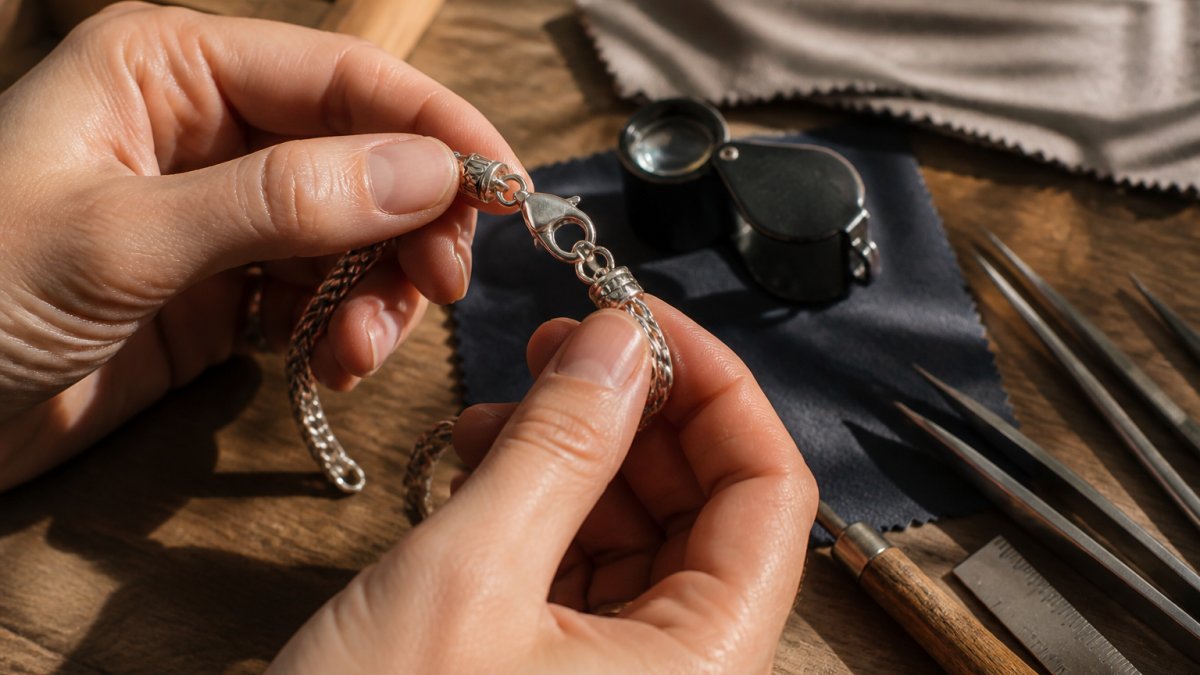
A quick field test: hold the piece and look at the edges, clasp, and any soldered joints. On plated jewelry, these high-wear spots are where the base metal shows through first. On solid metal, the color is consistent everywhere, including inside the clasp.
How to Verify Ethical and Sustainability Claims
"Sustainable," "ethical," and "eco-friendly" are unregulated in jewelry marketing, anyone can print them on a hangtag. Here's how to separate real claims from greenwashing:
- Look for third-party certifications, not brand language. Recognized programs include Fairmined and Fairtrade for gold sourcing, the Responsible Jewellery Council (RJC) for supply-chain practices, and SCS Recycled Content certification for recycled metals. A brand that has these will name them and link to the certificate.
- Ask for the recycled-content percentage. "Made with recycled silver" could mean 5% or 100%. A transparent brand can tell you the number and where the metal came from.
- Check traceability to the source. Can the seller name the mine, refiner, or recycling facility? Can they name the workshop or artisan? Vague answers like "responsibly sourced" without a location are a warning sign.
Health and Safety: What's Actually in Cheap Jewelry
Fast fashion jewelry often uses lead, cadmium, and nickel, which can trigger skin reactions and pose health risks:
- Nickel is the most common cause of allergic contact dermatitis from jewelry. Reactions include redness, itching, and blistering at the contact point. Even jewelry labeled "nickel-free" can contain trace amounts, and plated pieces expose the base metal as the plating wears.
- Lead is sometimes added to cheap alloys to make them easier to cast. It has no safe exposure level, and it can leach from jewelry, especially in children's pieces. Federal rules restrict lead content in children's jewelry, but adult costume jewelry is not held to the same limits (Jewelry).
- Cadmium is used in some low-cost platings and solders. It is a known carcinogen and is restricted in children's jewelry under federal law.
A practical rule: if a piece is not stamped with a metal purity mark and the seller cannot tell you what it's made of, assume it may contain one of these metals. If you have sensitive skin, stick to sterling silver, 14K gold or higher, titanium, or surgical stainless steel.
Supply Chain Opacity and Vague Claims
Brands that won't explain where their jewelry comes from are hiding something. If a seller can't say where a piece was made or what it contains, move on.
Vague marketing language is another warning sign:
- "Handcrafted" with no artisan information
- "Sustainable" without certification details
- "Ethically sourced" with no supply chain explanation
Real craftsmanship comes with a story. Frijja pieces are handcrafted by local artisans.
Sustainable Jewelry Materials Worth Choosing
Choosing the right materials is the foundation of avoiding fast fashion jewelry.
Sterling Silver and Fine Metals
Sterling silver (.925) is the gold standard for affordable, quality jewelry: durable, unlikely to cause allergic reactions, and cleanable and restorable, unlike cheap plating.
Fine metals like 14K gold, platinum, and palladium cost more but last indefinitely without tarnishing or degrading, they justify the price.
The key difference: fine metals hold their value, while fast fashion metals corrode within months.
Natural Gemstones and Authentic Stones
Real gemstones, sapphires, emeralds, rubies, diamonds, have durability and permanence. They don't fade or cloud, and each stone's natural variations add character.
Synthetic stones and glass imitations look identical at first. But they scratch easily, lose luster, and become cloudy. You can't restore them.
Natural gemstones like sodalite, opal, and amethyst offer beauty and longevity. The Moon Radiance Set from Frijja, for example, features genuine sodalite stones set in .950 sterling silver, a combination that will last for decades with proper care.

Recycled Metals for Jewelry: Durability and Value
Recycled metals offer the same durability as newly mined metals with a smaller environmental footprint.
Recycled sterling silver and gold perform identically to virgin metals, recycling doesn't degrade quality, and many luxury brands now use recycled precious metals exclusively.
Choosing recycled metals means avoiding fast fashion jewelry while supporting environmental responsibility. The Andean Promise Set from Frijja combines .950 sterling silver with genuine Andean opal, materials built to last.
Shift Your Mindset: Quality Over Quantity
The fastest way to avoid fast fashion jewelry is to stop thinking like a fast fashion buyer.
A Realistic Cost-Per-Wear Framework
Instead of asking "How much does this cost?" ask "How much does it cost per wear?"
Repair Service - Chains, Dislodged stones, Missing Stones (no soldering) →
A $50 sterling silver ring worn 200 times costs 25 cents per wear; a $10 fast fashion ring worn twice costs $5 per wear.
Calculate it this way:
| Item | Price | Estimated Wears | Cost Per Wear |
|---|---|---|---|
| Fast fashion ring | $10 | 2 | $5.00 |
| Sterling silver ring | $50 | 200 | $0.25 |
| Designer ring | $200 | 500 | $0.40 |
Quality pieces spread their cost across years of wear. That's how you actually save money.
But the simple formula leaves out three costs that change the answer:
- Repair and maintenance. A sterling silver chain that breaks can be re-soldered for a modest fee. A plated brass chain that breaks usually cannot be repaired economically, so its true cost is the replacement price. Add expected repair costs to the numerator.
- Resale value. Solid gold and sterling silver pieces retain a meaningful share of their value and can be sold to a jeweler or on a resale marketplace. Plated and base-metal pieces typically resell for near zero. Subtract expected resale value from the numerator.
- Realistic wear count. Most people overestimate how often they'll wear a trendy piece. Be honest: a statement necklace may get worn 5 times a year, while a simple silver band may get worn 300 times a year. Use the honest number.
A more complete formula:
(Purchase price + expected repairs − expected resale value) ÷ realistic number of wears = true cost per wear
Run that on a $10 plated ring you replace three times a year versus a $60 sterling silver ring you keep for five years, and the sterling piece usually wins by a wide margin.
A Simple Budget Rule for Building a Lasting Collection
You don't need to replace your whole jewelry box at once. A workable approach:
- Set a monthly or quarterly jewelry budget and treat it like any other category in your spending plan.
- Prioritize the pieces you wear most. If you wear earrings daily, invest there first. If you wear a statement necklace twice a year, buy it secondhand or skip it.
- Buy one quality piece at a time. A single sterling silver or 14K gold piece per season builds a durable collection within a couple of years.
Versatile Pieces That Last Through Trends
Buy pieces that work with multiple outfits and occasions. A classic sterling silver bracelet pairs with casual wear and formal events.
Versatility extends a piece's lifespan. You'll wear it more often, justifying the investment. Avoid jewelry designed around fleeting trends.
Frijja's collection focuses on timeless designs that complement any style, pieces meant to stay in your rotation for years.
How to Care for Jewelry to Extend Its Life
Quality jewelry requires basic maintenance. Proper care prevents tarnish, keeps stones brilliant, and protects clasps and joints.
Daily Cleaning and Storage
Wear jewelry after applying makeup and perfume, since these products dull metals and damage stones. Remove jewelry before showering, swimming, or exercising.
Store pieces in a cool, dry place, humidity causes tarnish, in soft cloth pouches or jewelry boxes.
Clean sterling silver monthly with a soft cloth. For stubborn tarnish, use a gentle silver cleaner. Avoid harsh chemicals.
Repair and Repurposing Options
Even quality jewelry needs repairs, clasps wear out, stones loosen, chains break. The difference is that quality pieces are worth repairing.
Frijja offers repair services for chains, dislodged stones, and missing stones starting at $20. We also provide design services to repurpose old pieces or recreate jewelry you love.

This is where cost-per-wear pays off: repairing a quality piece costs far less than replacing it with fast fashion alternatives.
Where to Buy Jewelry That Lasts
The retailer matters as much as the materials. Look for sellers who prioritize quality, transparency, and craftsmanship.
Avoid mass-market retailers that churn out weekly collections designed for fast fashion consumption.
Frijja specializes in handcrafted sterling silver jewelry made by local artisans, every piece selected for quality and durability, built to last, not designed to fail.
When you shop for jewelry that lasts, you're investing in pieces that become part of your life, not purchases you'll regret within weeks.
Avoiding fast fashion jewelry means making intentional choices about what you buy and why.
Frequently Asked Questions
How can you tell if jewelry is fast fashion?
Fast-fashion jewelry typically shows several red flags: extremely low prices (under $15 for multi-piece sets), vague material labels like 'metal alloy' or 'fashion jewelry,' no hallmarks or metal stamps, and no information about where or how it was made. Check the clasp quality, cheap clasps break easily. Look for tarnishing, discoloration, or green staining on skin after wear, which signals low-quality base metals. Brands that emphasize trend-driven designs over timeless pieces and offer no repair or care guidance are usually fast-fashion retailers.
What materials should you look for when buying long-lasting jewelry?
Seek sterling silver (.925 or .950 stamps), 14K or 18K gold, platinum, or stainless steel as base metals. For gemstones, choose natural diamonds, sapphires, emeralds, or other genuine stones rather than glass or synthetic alternatives. Recycled metals are equally durable as newly mined metals, what matters is the metal type, not its origin. Avoid cheap alloys, nickel-heavy compositions, and plated metals that wear through quickly. Handcrafted pieces from artisanal makers often use higher-quality materials and construction techniques that extend the jewelry's lifespan significantly.
Is recycled metal durable enough for jewelry?
Yes. Recycled metals have identical durability to newly mined metals because the recycling process doesn't weaken the material, it simply melts and reforms it. Recycled sterling silver, gold, and platinum perform exactly as well as virgin metals. The durability depends on the metal type and purity (sterling silver .925, 14K gold, etc.), not whether it's recycled. Choosing recycled metals is a sustainable decision with zero compromise on longevity, making it an excellent way to avoid fast fashion while supporting environmental responsibility.
How do you care for inexpensive jewelry that tarnishes?
Tarnishing happens when low-quality metals oxidize. Prevent it by storing jewelry in airtight containers, away from moisture and humidity. Clean tarnished pieces with a soft cloth and mild soap, or use a silver-cleaning solution designed for your metal type. Wear jewelry regularly, body oils can actually help prevent tarnishing. Remove jewelry before swimming, showering, or exercising. For pieces that tarnish repeatedly, consider professional cleaning or repair services. Better yet, invest in higher-quality materials like sterling silver that resist tarnishing far longer than cheap alloys.
0 comentarios