

Table of Contents
- What Makes Sterling Silver Durable
- Sterling Silver vs. Fine Silver: Which Lasts Longer
- Does Sterling Silver Tarnish With Sweat and Daily Wear
- How to Clean Sterling Silver Jewelry at Home
- Best Storage Practices for Silver Jewelry Longevity
- Handmade vs. Mass-Produced: Structural Integrity and Repairability
- Real-World Durability: What to Expect From Everyday Wear
- Sustainability and Recycling of Sterling Silver
- Frequently Asked Questions
Last Updated: September 26, 2026
What Makes Sterling Silver Durable
Sterling silver jewelry durability depends on understanding what you're actually wearing. The alloy composition, specifically the ratio of pure silver to copper, determines how well a piece withstands daily wear, moisture, and the friction of skin contact.
Sterling silver contains 92.5% pure silver and 7.5% other metals, primarily copper (Buying Platinum, Gold, and Silver Jewelry). Copper hardens the metal, giving it structural integrity while keeping precious metal content high enough to justify the "silver" designation. Pure silver is too soft and malleable for wearable jewelry.
The 925 hallmark stamped inside rings, bracelets, and necklaces certifies the piece contains at least 92.5% pure silver, as required by U.S. federal law. Frijja's handcrafted pieces, like the Moon Radiance Bracelet in 950 Sterling Silver, use 950 silver (95% pure).
The 925 Hallmark Explained
The 925 hallmark is a legal requirement enforced by the Federal Trade Commission to guarantee composition and prevent fraud.
Higher silver content means better resistance to cracking under stress. 925 sterling is the industry standard because it balances precious metal content with wearability.
Why Copper Alloys Strengthen Sterling Silver
Copper bonds with silver at the molecular level, creating a stronger crystalline structure that resists permanent bending, denting, and stress fractures.
For handmade jewelry, the copper alloy ensures that when an artisan hammers and shapes sterling silver, the final piece maintains structural integrity rather than developing weak points or stress fractures.
The trade-off is that copper oxidizes, causing tarnish (copper oxide), a surface reaction that doesn't compromise strength but affects appearance.
Sterling Silver vs. Fine Silver: Which Lasts Longer
Fine silver is 99.9% pure silver with almost no alloy content. It's beautiful and hypoallergenic, but impractical for most jewelry.
Fine silver is so soft that daily wear causes permanent deformation within months. It works only for display pieces or occasional wear.
Sterling silver maintains its shape through years of daily wear. A well-made piece can last decades or a lifetime with basic care.
This structural difference is why professional jewelry makers use sterling silver for wearable pieces.
Does Sterling Silver Tarnish With Sweat and Daily Wear
Yes. Sterling silver tarnishes with sweat, moisture, and air exposure, a chemical inevitability when copper is present.
Understanding Oxidation and Tarnish Formation
Tarnish is copper oxide, a dark layer that forms when copper reacts with oxygen, sulfur compounds, or moisture. Humidity, sweat, and sulfur-containing substances accelerate the process.
Tarnish does not weaken sterling silver, it's a surface reaction. Regular maintenance prevents it from becoming difficult to remove or causing microscopic pitting.
How Skin pH and Moisture Accelerate Tarnishing
Sweat contains salts, acids, and sulfur compounds that speed up oxidation. People with higher skin pH tarnish sterling silver faster than those with lower pH.
Moisture accelerates tarnishing. Humid environments, hand washing, and swimming expose sterling silver to water and reactive compounds.
How to Clean Sterling Silver Jewelry at Home
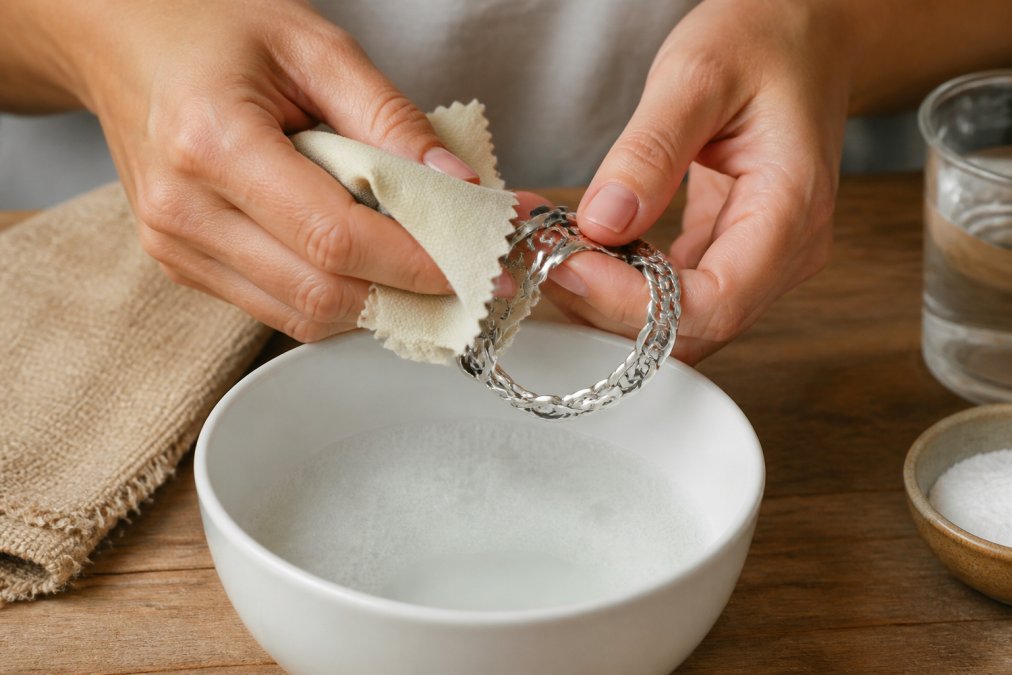
Clean sterling silver at home with minimal supplies, removing tarnish without scratching handcrafted details.
Gentle Cleaning Methods That Protect Handcrafted Details
For handmade sterling silver, soak jewelry in warm water with a few drops of dish soap for 5-10 minutes. Gently wipe with a soft cloth, rinse thoroughly, and dry immediately.
For heavier tarnish, mix baking soda with water to create a paste. Apply with a soft cloth, rubbing gently in circular motions. Rinse and dry immediately.
| Cleaning Method | Best For | Time Required | Abrasiveness |
|---|---|---|---|
| Warm water and soap | Light tarnish, delicate pieces | 10-15 minutes | None |
| Baking soda paste | Moderate tarnish, flat surfaces | 10-20 minutes | Mild |
| Commercial tarnish remover | Heavy tarnish, simple designs | 5-10 minutes | Moderate to high |
| Professional cleaning | Valuable pieces, intricate work | Varies | Controlled |
When to Avoid Abrasive Polishing
Commercial polishing cloths and creams are abrasive, removing microscopic metal layers. Repeated use gradually thins the metal and can expose underlying copper or cause pitting.
Avoid abrasive polishing on handcrafted jewelry with fine details, pressure can blur edges, flatten textures, and damage intricate work.
Moon Radiance Bracelet 950 Sterling →
Best Storage Practices for Silver Jewelry Longevity
Where and how you store sterling silver jewelry directly impacts how fast it tarnishes and how long it lasts structurally.
Moisture Control and Anti-Tarnish Solutions
Store sterling silver in a cool, dry place away from moisture. A bedroom closet is better than a bathroom; a desk drawer is better than a kitchen cabinet.
Use anti-tarnish strips or pouches inside your storage container to absorb sulfur compounds and oxygen. Replace every 6-12 months.
Store sterling silver separately from other metals to avoid galvanic reactions that accelerate tarnishing. Use soft pouches or anti-tarnish paper-lined boxes.
Avoid storing sterling silver in plastic bags or containers without ventilation. Plastic can trap moisture and create an environment where tarnish forms rapidly. Use breathable fabric pouches or paper-lined boxes instead.
Handmade vs. Mass-Produced: Structural Integrity and Repairability
This is where handcrafted sterling silver jewelry reveals its true advantage. Handmade pieces are not just aesthetically unique, they're structurally superior in ways that matter for longevity.
Why Handcrafted Pieces Often Last Longer
A metalsmith creating sterling silver jewelry by hand works with the material's properties, not against them. Each bend, hammer strike, and solder joint is executed with precision and understanding of how the metal will respond. The artisan adjusts technique based on the specific piece, the metal's behavior, and the intended design.
Mass-produced jewelry is made by machines applying the same force, the same speed, and the same technique to every piece. Machines are consistent, but they're not adaptive. A machine cannot sense when metal is becoming work-hardened and needs annealing (heat treatment to restore flexibility). It cannot adjust pressure based on the specific thickness or composition of a particular piece. This leads to stress points, micro-fractures, and structural weaknesses that develop into failures over time.
Handmade sterling silver jewelry also uses better materials more consistently. Artisans source high-quality sterling silver and often use higher percentages of pure silver (like the 950 silver used in Frijja's handcrafted pieces) because they understand the durability benefit. They invest in proper tools, proper techniques, and proper finishing because their reputation depends on longevity.
Repair and Restoration Options for Handmade Silver
If a handcrafted sterling silver piece is damaged, a bent band, a broken solder joint, a loose stone setting, it can almost always be repaired by a skilled jeweler. This is one of the defining advantages of handmade jewelry.
A jeweler can carefully reshape bent metal, re-solder joints, tighten settings, and restore handcrafted details in ways that preserve the original design and intent. The repair process respects the artisan's original work rather than replacing or destroying it.
This repairability is not available for most mass-produced jewelry. The construction methods, materials, and design often make repairs impossible or economically impractical. A mass-produced ring with a broken solder joint is typically discarded and replaced.
For pieces you intend to wear for decades or pass down to the next generation, repairability is a crucial durability factor.
Real-World Durability: What to Expect From Everyday Wear
Sterling silver jewelry worn daily will tarnish. It will show wear. It will require maintenance. This is not failure, it's the normal life of a precious metal that's being used.
Common Causes of Premature Damage
Premature damage typically results from one of three causes: impact stress, chemical exposure, or improper storage.
Chemical Exposure and Skin Reactions
Sterling silver itself is hypoallergenic for most people. The copper alloy, however, can cause reactions in people with copper sensitivity. If you develop a green or black mark on your skin from wearing sterling silver, or if the jewelry causes itching or irritation, copper sensitivity is likely the cause.
Sustainability and Recycling of Sterling Silver
Sterling silver is infinitely recyclable. The metal doesn't degrade or lose quality through recycling. A sterling silver bracelet melted down and reformed is chemically identical to new sterling silver.
Frequently Asked Questions
How long does sterling silver jewelry typically last?
High-quality handmade sterling silver jewelry can last a lifetime with proper care. The 925 hallmark ensures durability through its copper alloy composition, which strengthens the metal against everyday wear. Longevity depends on storage conditions, cleaning frequency, and how often you wear the piece. Pieces stored in low-moisture environments and cleaned regularly maintain their appearance and structural integrity for decades.
Does sterling silver tarnish with sweat and skin contact?
Yes, sterling silver can tarnish from sweat and skin oils, especially in humid conditions. Sweat contains salts and acids that accelerate oxidation on the metal's surface. The rate of tarnishing varies based on your skin pH and how often you wear the piece. Regular removal after sweaty activities and storing jewelry in a dry place with anti-tarnish strips significantly slows tarnish formation.
What's the difference between 925 sterling silver and fine silver?
Sterling silver (925) contains 92.5% pure silver mixed with 7.5% copper alloy, making it stronger and more durable for jewelry. Fine silver (99.9% pure) is softer and more prone to bending or denting during daily wear. The copper in sterling silver increases scratch resistance and structural integrity while maintaining the precious metal's beauty. This is why handcrafted sterling silver jewelry is preferred for rings, bracelets, and pieces worn frequently.
How do I restore shine to tarnished sterling silver at home?
Use a soft polishing cloth designed for sterling silver to gently buff away tarnish. For heavier tarnish, soak the piece in warm water with a few drops of mild dish soap for 5-10 minutes, then use the cloth to polish. Avoid abrasive scrubbing or harsh chemicals, which can damage handcrafted details and fine metalwork. For intricate pieces, professional cleaning preserves the artisan craftsmanship better than aggressive home methods.
0 comments